What pack rats are
Pack rats, or white-throated wood rats, are native Sonoran Desert rodents, a bit smaller than a Norway rat, with large ears, soft fur and a furry tail.
Each one builds and defends a midden, a mound of sticks, cholla joints, prickly pear pads, mesquite pods, rocks, bones and anything that catches its eye, from bottle caps to car keys.
Middens are used and added to for generations; a well-placed one can be very old.
Pack rats are mostly active at night. They eat cactus, seeds, mesquite pods, leaves and fruit, which also gives them most of the water they need.
Where they nest around Tucson homes
- Under cholla, prickly pear and dense shrubs near walls
- Against the inside of block walls and in wall corners
- In woodpiles, stacked pavers and stored materials
- Under sheds, decks, trailers and RVs
- In garages with clutter, boxes and bags of feed
- In engine bays of vehicles that sit, even for a weekend
- In attics and wall voids, occasionally, through gaps at the roofline
The damage they do
Vehicles
Pack rats packing a nest into an engine bay chew wiring harnesses, vacuum hoses, insulation and air filters.
Repairs can be expensive, and nesting material near a hot engine is a fire risk. Cars, trucks, RVs, boats and golf carts are all targets.
Homes and yards
What decides the rodents plan in Tucson is the building near the Rillito corridor, and the irrigation valve is on that list.
Health
Pack rat nests contain droppings and urine. Like other rodents, they can carry disease, so middens should be cleared with gloves, a mask and disinfectant.
For rodents in Tucson, the visit starts at the pet door and then follows whatever that shows.
Inspection
The technician walks the yard, walls, sheds and garage, checks vehicles and stored equipment, and looks along the roofline. Each midden is noted, along with the trails between it and food and water.
Trapping
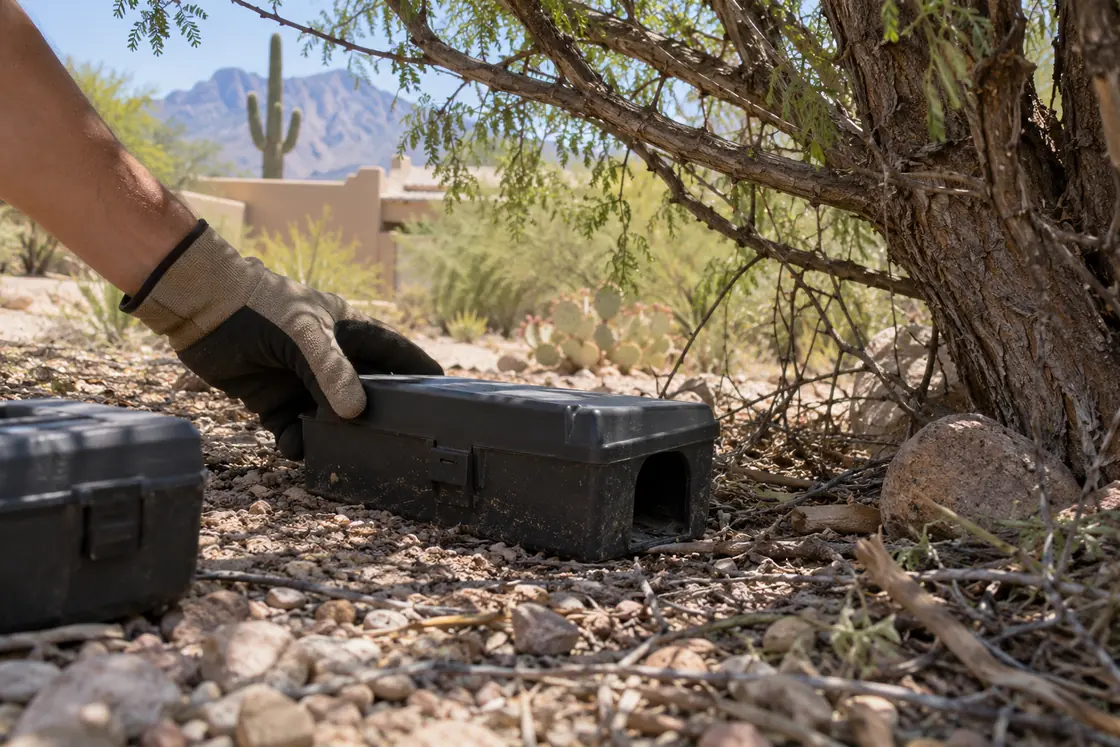
Live-catch or lethal traps are set near active middens and along runways, depending on the situation and your preference.
Pack rats are trapped first, before the midden is disturbed, so they do not simply move to a new spot nearby.
Clearing the midden
Once the rat is gone, the midden is taken apart and removed with protective gear, and the area is treated for the insects that lived in it.
Leaving a midden in place invites the next pack rat.
Sealing and yard changes
Gaps into garages, sheds and attics are sealed with metal. The technician also points out the yard features that attract pack rats: cactus and shrubs against the house, woodpiles, clutter and food sources.
Follow-up
Return visits check traps and look for new activity or rebuilt nests.
Protecting your vehicles
- Park away from cactus, shrubs, woodpiles and walls where middens are
- Keep the garage closed and its door seals in good shape
- Drive vehicles regularly, and pop the hood on ones that sit
- Keep the area around parking clear of debris
- For RVs and stored vehicles, check the engine bay and undercarriage before driving
What decides the rodents plan in Tucson is the building near Catalina Foothills, and the meter box is on that list.
- Trim cholla and prickly pear back from walls and the house
- In Tucson, rodents near the Rillito corridor are traced from the ridge vent, not from a product chosen before anyone looks.
- Clear brush and clutter along the inside of block walls
- Pick up fallen fruit and mesquite pods
- Keep pet food, bird seed and feed in sealed containers
In Tucson, rodents near Marana are traced from the garage-door sweep, not from a product chosen before anyone looks.
We do not clear a midden while the rat is still using it, scatter poison around your yard or leave middens in place. And we do not call the job finished without a follow-up.
Desert edge and wash properties
Homes on the edge of open desert, in the Foothills, Tanque Verde, Oro Valley, Marana and along the washes will always have pack rats nearby.
For those properties, a periodic yard check for new middens, especially near the house and where vehicles park, keeps problems small. You can choose whether to set that up.
What to look for near Oro Valley
Call when you find a midden near the house, nesting under a hood or chewed wiring. Call now.
Pack rat quick facts for Tucson
- Species: the white-throated woodrat, *Neotoma albigula*, the pack rat in most Tucson yards. It has a furry tail, large ears and a white throat.
- Middens: nests of sticks, cactus joints, cholla and debris, often under prickly pear, palo verde and mesquite, under sheds or in engine bays.
- Food: prickly pear pads and fruit, cholla, mesquite pods, seeds and garden plants.
- Damage: chewed wiring and hoses in cars and AC units, nests in attics and stored items, and kissing bugs drawn to middens near the house.
- One per nest: usually one adult lives in each midden, but a new rat often moves into an old midden left in place.