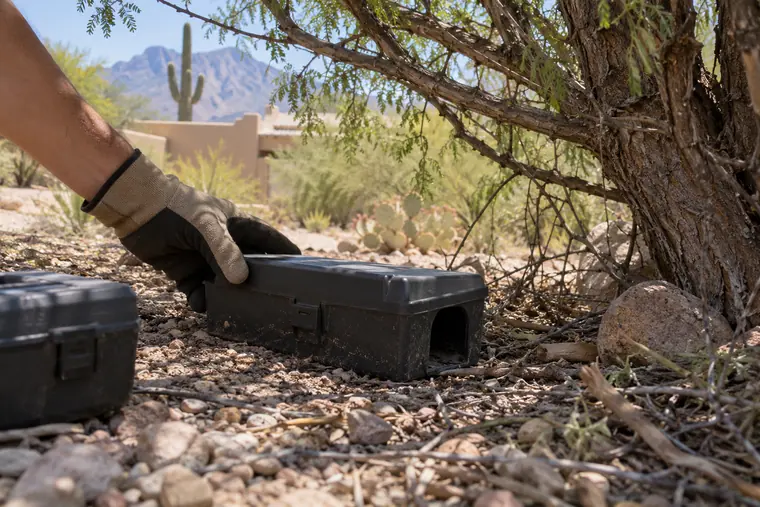
Pack Rat Removal
Pack rats trapped and their middens removed from yards, sheds, garages and engine bays, plus the clean-up and yard changes that keep the next one from moving in.
Rodent control in Tucson for pack rats in the cholla and the engine bay, roof rats in the citrus and the attic, and mice and ground squirrels in the garage, from Midtown and Sam Hughes to the Foothills and Vail.
If you have seen local pest problems near Marana, leave the soffit gap as you found it and photograph it.
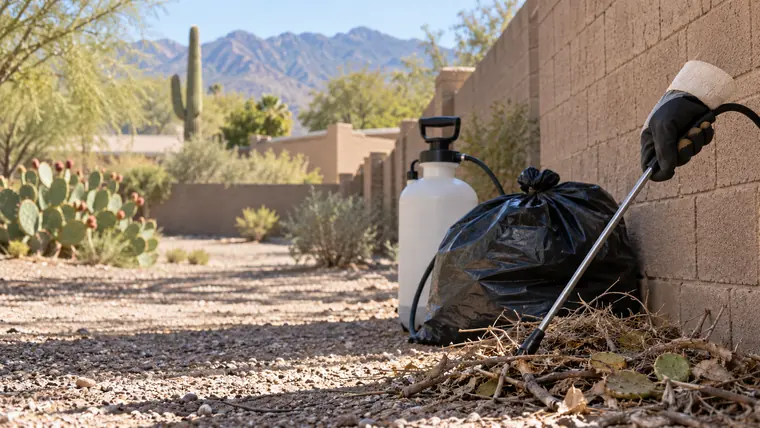
These are the jobs behind almost every rodent call in Tucson.
Each one with a link has its own page with the signs and the work. For sealing a house against rodents, call and ask.
Pack rats trapped and their middens removed from yards, sheds, garages and engine bays, plus the clean-up and yard changes that keep the next one from moving in.
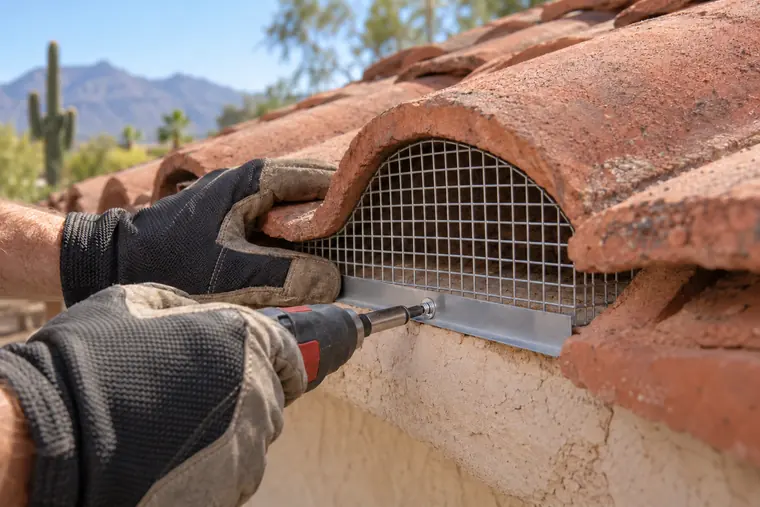
Roof rats in citrus, palms and attics in older Tucson neighborhoods. Roofline gaps sealed with metal, traps set in the attic and checked until the rats are gone.
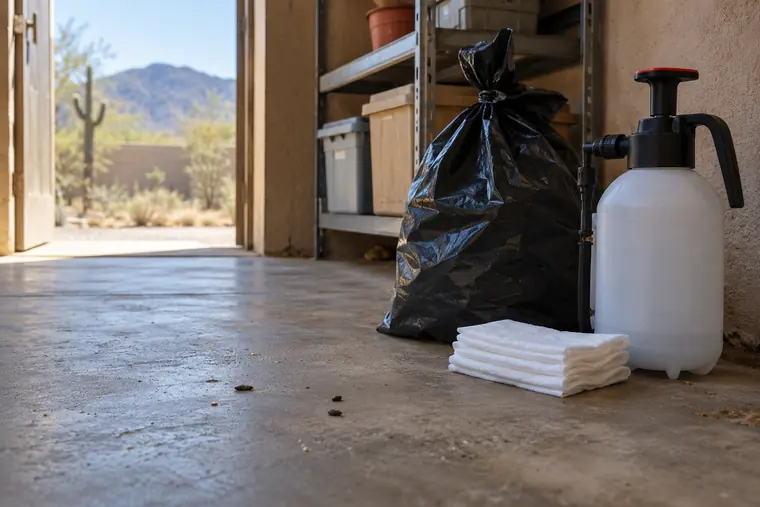
House mice and deer mice in garages, kitchens and storage. Gaps sealed, traps placed, and careful, hantavirus-aware cleanup of droppings and nests.
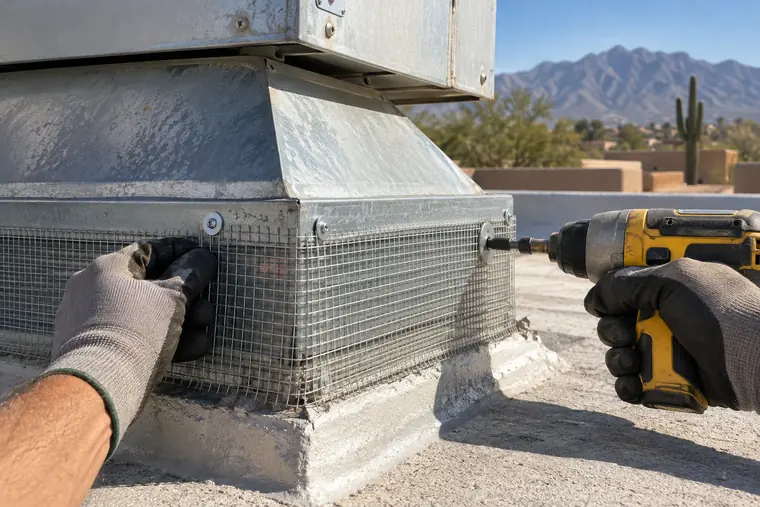
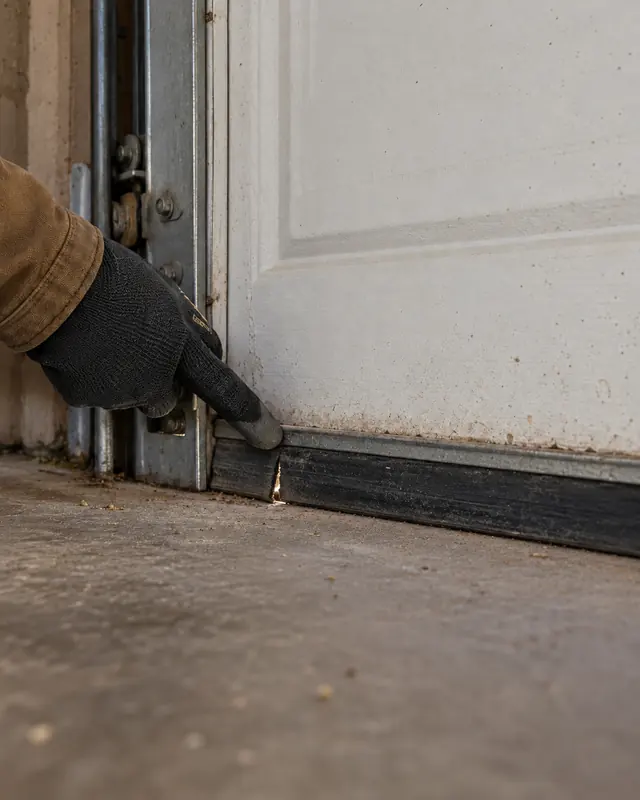
The sealing work that keeps every kind of rodent out. Garage doors, weep screeds, vents, roof tiles and utility gaps closed with materials rodents cannot chew.
Rock squirrels and round-tailed ground squirrels burrowing under slabs, patios, block walls and garden beds. Burrows found, squirrels trapped, and the spots they dig sealed off.
Pocket gophers pushing up mounds in irrigated lawns, gardens and fruit tree basins. Main tunnels found, gophers trapped, and wire baskets for the plants worth saving.
What you notice by day.
What happens at night.
Switch the view. If the night list sounds familiar, a quick call tells you what to do next.
Call about itRodent control in Tucson, AZ is mostly about pack rats, and pack rats are not like city rats.
Call now if you have found a pile of sticks and cactus under a shrub, chewed wiring under your hood or droppings in the garage.
A technician inspects the yard, garage, vehicles and roofline, finds the nests and the way in, and gives you a price before any work.
Tucson sits in the middle of the Sonoran Desert, and the desert comes right up to the back wall.
White-throated wood rats, the pack rats, build big nests called middens under cholla, prickly pear and mesquite, in woodpiles, under sheds and decks, and in the engine bays of cars and RVs, where they chew wiring and hoses.
Washes like the Rillito, the Pantano and the Santa Cruz act as highways that carry rodents from open desert into neighborhoods.
Pack rats are not the only ones.
Roof rats are a newer arrival compared with pack rats and turn up in older neighborhoods with citrus, palms and dense hedges, climbing into attics at the roofline.
House mice and deer mice move into garages and storage when nights cool in fall, and deer mice carry hantavirus, which makes cleanup something to take seriously.
Ground squirrels dig under slabs, patios and walls.
This site is about rodents first, and this page walks through each one, how the technician deals with it, the neighborhoods we cover and what people ask before they book.
Desert rodents need desert methods. A pack rat living in a cholla midden behind your wall is not handled the way a mouse in a Midwest kitchen is.
The technician deals with each rodent the way it actually lives here: middens in the yard, nests under the hood, attic runways for roof rats, garage corners for mice.
We remove the nest, not just the rat. A pack rat midden left in place is an open invitation for the next pack rat.
After trapping, middens are cleared with protective gear, because they hold droppings, urine and the insects that live in them.
Sealing with metal. Rodents chew through foam, plastic and rubber. Gaps are sealed with hardware cloth, steel mesh, metal flashing and proper garage door seals, which is what makes the result last.
No loose poison. Poison scattered around a desert yard reaches pets, owls, hawks and bobcats as well as rodents, and rodents that eat it often die where you cannot reach them.
Trapping is the primary method, with locked bait stations only where they make sense.
You get the price first. Rodent jobs vary from a single midden to a whole roofline. You hear the cost for your property after the inspection, and nothing starts until you agree.
Arizona licensing. Pest and rodent control in Arizona is licensed by the Arizona Department of Agriculture's Pest Management Division. Ask for the license number when you call.
Here is what each rodent problem looks like in Tucson, why it happens here and what the visit does about it.
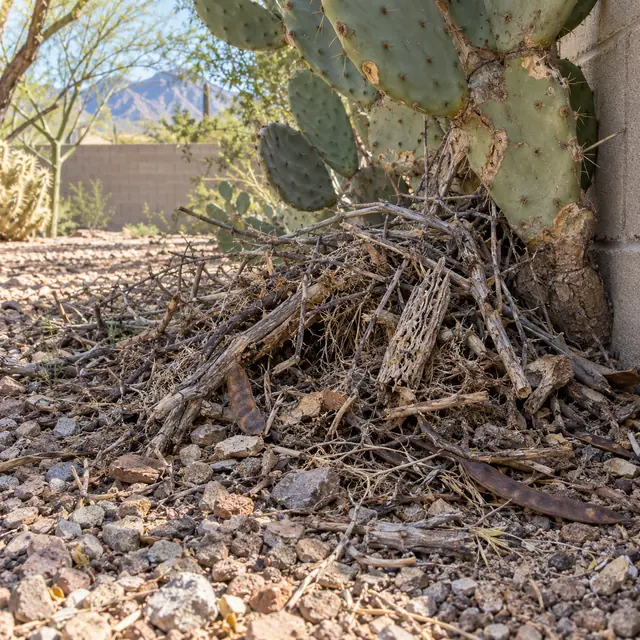
A midden is a mound of sticks, cholla joints, prickly pear pads, mesquite pods, dog droppings and anything shiny, often several feet across.
You find them under cactus and shrubs, against walls, under sheds and in woodpiles. Each one houses a pack rat and, often, kissing bugs and scorpions. See pack rat removal.
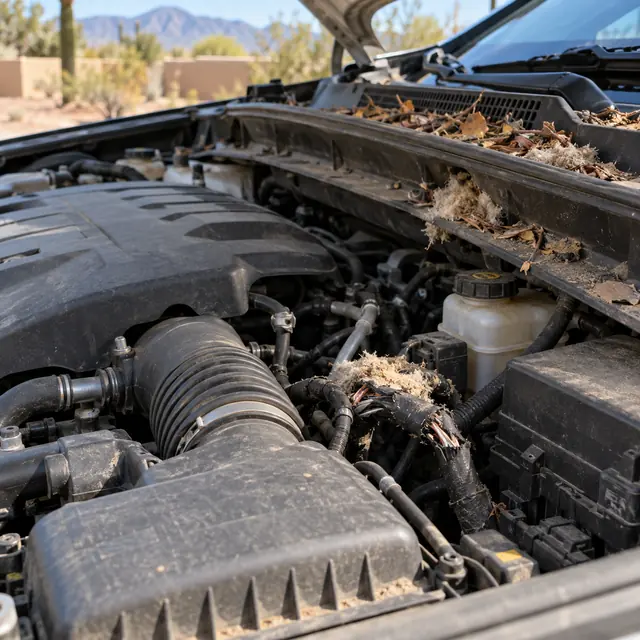
Pack rats nest in engine bays of cars, trucks, RVs and golf carts that sit for even a few days, and they chew wiring, hoses and insulation.
Sticks and cactus pieces packed around the engine, a smell of urine and warning lights on the dash are the signs. Trapping nearby rats and changing where and how you park is the fix.
Roof rats are slim, dark climbers with long tails that live in citrus, palms and dense hedges and enter attics at the roofline and under tile eaves.
Hollowed-out citrus on the tree and running noises in the ceiling at night are classic signs. See roof rat control.
Mice move into garages, storage rooms and kitchens when the nights cool.
Deer mice, with white bellies and feet, are the main carrier of hantavirus in Arizona, so their droppings should never be swept or vacuumed. See mouse control.
Round-tailed ground squirrels and rock squirrels dig burrows under slabs, patios, walls and sidewalks, and rock squirrels climb into attics and chew irrigation lines.
Burrow entrances along the foundation and dirt pushed out from under the patio are the signs.
Homes that back onto the Rillito, the Pantano Wash, Tanque Verde Wash or the Santa Cruz River see steady rodent pressure, because the washes connect neighborhoods to open desert.
For those homes, sealing and yard clean-up matter even more than trapping.
Chewed irrigation lines
In the dry months rodents chew drip lines and sprinkler tubing for water.
Leaks that keep coming back in the same part of the yard often point to rodents, and the wet soil they create invites termites and roaches too.
Kissing bugs from middens
Conenose bugs, often called kissing bugs, live in pack rat middens and fly to porch lights in late spring and early summer, sometimes getting inside and biting at night.
Removing middens near the house is the most effective way to cut them.
Monsoon storms from July into September flood burrows and washes, and rodents move to higher, drier ground, which often means under a shed, into a garage or behind stored items.
A spike in activity after a storm is normal and a good time to check the garage.
Pool pump enclosures, AC condensers and the space under rooftop evaporative coolers are warm, sheltered and close to water, and pack rats and mice nest in all of them.
Chewed wiring in a pool timer or a condenser that will not start can be rodent damage. The technician checks equipment pads and enclosures as part of every inspection.
We cover Tucson from the historic neighborhoods near downtown and the university to the Foothills, the east side and the southeast, plus these nearby Pima County communities.
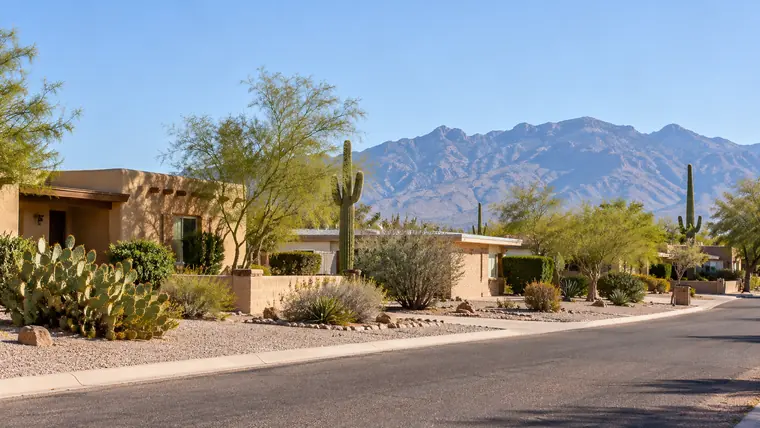
Homes in the Catalina Foothills, Tanque Verde, Oro Valley and Marana, close to open desert and washes, see the most pack rats and ground squirrels.
Older Midtown, Sam Hughes and Armory Park homes with citrus, palms and alleys see more roof rats and mice.
Newer subdivisions in Rita Ranch, Civano and Vail, built on former desert, often have pack rats moving in from the lots next door.
Tucson sits in the Sonoran Desert, ringed by mountains and cut by washes, with mild winters, very hot summers and a monsoon season.
Rodents follow the heat, the rain and the food, so the calendar matters.
Near Oro Valley, local pest problems turn up at the attic hatch before they turn up in the main rooms.
Near Sahuarita, local pest problems turn up at the attic hatch before they turn up in the main rooms.
Pack rats, the white-throated woodrat (*Neotoma albigula*), stay busy in their middens and in the engine bays of parked cars, and winter visitors return to find nests in stored vehicles and RVs.
Round-tailed ground squirrels (*Xerospermophilus tereticaudus*) and rock squirrels (*Otospermophilus variegatus*) come out of their burrows and raise young.
Botta's pocket gophers (*Thomomys bottae*) push up mounds in irrigated yards, and roof rats (*Rattus rattus*) feed on ripening citrus.
In Tucson, local pest problems near Marana are traced from the ridge vent, not from a product chosen before anyone looks.
Heat sends rodents toward water and shade around homes: pool equipment, AC units, drip lines and garages. Kissing bugs (*Triatoma rubida*) leave pack rat middens and fly toward porch lights at night.
The local pest problems check in Tucson covers the block fence and the stored firewood on the same walk-through.
Storms flood the washes, including the Rillito, Pantano Wash and the Santa Cruz, and push rodents out of low ground.
New plant growth after the rains feeds a second round of young rodents, and pack rats rebuild damaged middens.
Fall, October to November
Rodent numbers peak after the monsoon. Mice look for winter shelter, pack rats stock their middens, and it is a good time to seal homes and protect vehicles before winter.
Remove middens near where you park, keep the garage sealed and closed, avoid parking for days next to cactus and brush, and pop the hood to check often.
Do not close up the expansion joint before the inspection for local pest problems in Tucson, or the useful evidence is gone.
Do repellents or under-hood lights work?
Some people find they help a little, but none replace trapping nearby pack rats and removing their nests.
Yes, in some neighborhoods, especially older areas with citrus and palms. The inspection confirms whether you have roof rats, pack rats or mice, because each needs a different plan.
Is hantavirus a concern?
Deer mice can carry hantavirus. Never sweep or vacuum dry droppings. Spray with disinfectant, let it soak and wipe up with gloves, or have heavy contamination cleaned professionally.
Will you use poison?
Trapping is the main method. Loose poison is not scattered in yards or attics because of the risk to pets and wildlife. Locked bait stations may be used where they make sense.
Most jobs take an initial visit plus one or more follow-ups over a few weeks, until traps stay empty and no new signs appear.
Removing the midden alone usually just moves the rat a few feet. Trapping first, then clearing the midden, is what works.
Yes. Burrows near foundations, patios and walls can be treated and the squirrels trapped where permitted.
If you have seen local pest problems near Oro Valley, leave the gable vent as you found it and photograph it.
Call now and ask about the first open time. You get a straight answer.
Do not close up the expansion joint before the inspection for local pest problems in Tucson, or the useful evidence is gone.
Monsoon rain brings new plant growth and seeds, so rodents breed more and their young spread out in late summer and fall. Storms also flood washes and push rodents toward homes.
Yes. Kissing bugs live in pack rat middens and feed on the rats. When a nest is near the house, the bugs often fly to porch lights and get indoors. Removing nearby middens helps.
Yes. In dry months, pack rats, ground squirrels and gophers chew drip lines and emitters to get water. Chewed lines are a common sign of rodent activity in Tucson yards.
In Tucson: 85701, 85704, 85705, 85706, 85710, 85711, 85712, 85713, 85714, 85715, 85716, 85719, 85730, 85745, 85746, 85747, 85748, 85756, 85757.
Nearby: Catalina Foothills 85718, 85750; Tanque Verde 85749; Oro Valley 85737, 85742, 85755; Marana 85653, 85658, 85743; Vail 85641; Sahuarita 85629. Not sure about your ZIP code? Call now and give us your street.
Call now, tell us what you found and where, and a technician will inspect the property, show you the nests and gaps and quote before any work.
If you have seen local pest problems near Marana, leave the soffit gap as you found it and photograph it.