Pocket gophers in Tucson yards
Pocket gophers are burrowing rodents with strong front claws and fur-lined cheek pouches. In the desert, they follow water.
A Tucson yard with grass, a vegetable garden, fruit trees on drip or flood irrigation, or a lush planted area is the best habitat for miles, and a single gopher can dig a tunnel system covering much of a yard.
They eat roots, bulbs and whole plants pulled down from below.
Signs of gophers
- Fresh fan or crescent-shaped mounds of soil with the hole plugged on one side
- Plants, especially vegetables, roses and young trees, wilting or vanishing from below
- Soft or sinking spots in the lawn over tunnels
- Chewed drip lines and irrigation tubing, leaving wet spots or dry plants
- Mounds in the basins around citrus and other fruit trees
Ground squirrels leave open holes and are seen above ground in the daytime. Gophers almost never come out, and their holes stay plugged.
Where gophers do the most damage
Irrigated lawns, vegetable gardens and raised beds without a wire bottom, new landscaping, rose beds and young fruit trees take the most damage.
Homes with large irrigated lots in the older parts of Tucson, and newer homes next to washes and open land on the edges of town, see the most activity.
How gopher removal works
Finding the main run
The freshest mounds show where the gopher is working.
The technician probes the soil beside the mound to find the main tunnel the gopher uses to travel, rather than the short side tunnel that leads to the surface.
Trapping
Traps are set in the main run, usually facing both directions, and the opening is covered so no light gets in.
They are checked, gophers removed, and traps reset until no new mounds appear. Trapping is reliable and keeps poison out of soil where pets, birds and other animals forage.
Follow-up
In irrigated yards, a new gopher can move into an empty tunnel system from next door or a nearby wash. Follow-up visits catch it before the damage starts again.
Protecting plants
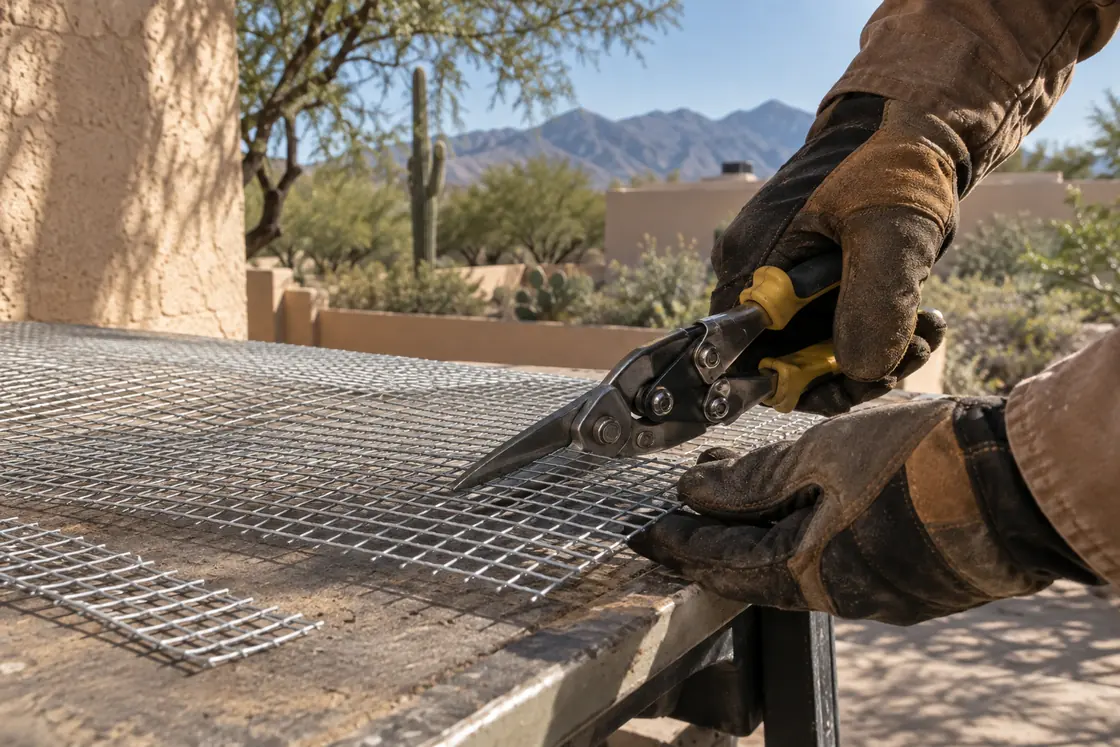
Plant new trees, shrubs and roses in wire baskets that surround the root ball. Build raised beds with hardware cloth across the bottom.
Around a vegetable garden, a buried barrier of hardware cloth along the edges slows gophers coming in from the rest of the yard.
Gophers and irrigation
Gophers often follow drip lines because the soil there is soft and moist, and they chew through tubing as they go.
After the gophers are trapped, check the drip system along the runs where mounds appeared and repair the lines. Burying new tubing in a wire-lined trench keeps the damage from repeating.
What does not work well
Flooding tunnels, smoke cartridges, vibrating stakes and sonic devices are popular, but the gopher usually blocks off the tunnel or moves to another part of the system.
Store-bought bait placed in the wrong tunnel often misses and can put pets and wildlife at risk.
Gophers in the monsoon
Summer storms soften dry soil and make digging easy, so gopher activity often jumps in late summer.
Flooded tunnels push gophers to new parts of the yard, and fresh mounds can appear in places that were quiet all spring.
After the gophers are gone
Flatten old mounds and fill the sunken runs so the lawn and garden can recover, and keep an eye on the same spots for the next month.
A new fresh mound means another gopher has found the tunnel system, and the sooner it is trapped, the less root damage there is.
General pests near the Rillito corridor
Call when fresh mounds appear in more than one spot, plants are being pulled down from below, or a new garden or tree is at risk.
Call now and tell us where the mounds are and how long they have been appearing.
Gopher quick facts for Tucson
- Species: Botta's pocket gopher, *Thomomys bottae*, the gopher in most Tucson yards.
- Mounds: fan or crescent shaped, with a plugged hole off to one side, unlike the open holes of ground squirrels.
- Damage: chewed roots, drip lines and sprinkler pipes, and plants pulled into the ground from below.
- Activity: gophers dig most in moist soil, so mounds increase in irrigated yards and after the monsoon.
- Methods: trapping in the main tunnel, plus wire baskets and underground mesh to protect new plantings.